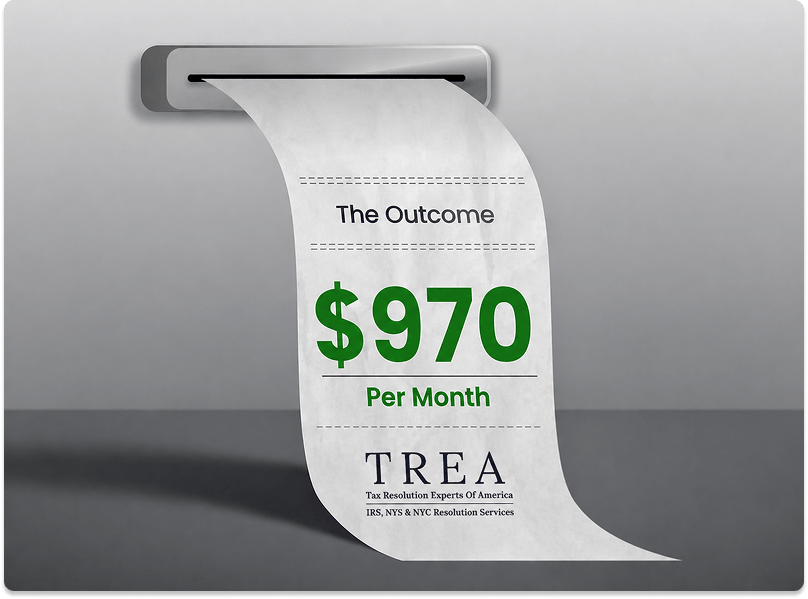
How a $70,000 IRS Debt Was Stabilized Through a Structured Payment Plan
The Problem
A taxpayer engaged our firm after accumulating approximately $70,000 in IRS liabilities spanning multiple tax years.The matter involved ongoing collection exposure, unresolved compliance concerns, and the need for a coordinated resolution strategy.
The client was exposed to potential
levy actionThere was no unified resolution
strategy in placeOne year was already in collections (ACS) Another year was in a Collection Due
Process (CDP) hearing
At the time, the taxpayer’s situation lacked a coordinated resolution structure and remained vulnerable to continued IRS collection activity, including enforced collection measures.
The Challenges
Significant IRS balance due with ongoing penalties and interest
Taxpayer unable to full-pay the liability immediately
Need to restore filing and payment compliance before long-term resolution options could be properly evaluated
Financial limitations requiring a realistic and sustainable payment structure
Concern regarding potential IRS enforcement action and the taxpayer’s ability to sustain a long-term payment arrangement
The Strategy
After evaluating the procedural posture of the case, we determined that remaining in the CDP/Appeals process was unlikely to materially improve the taxpayer’s ultimate resolution outcome.
Instead, the strategy focused on stabilizing the account, restoring structure, and negotiating a sustainable path forward.
The taxpayer moved from uncertainty and collection exposure to a structured and predictable resolution framework
IRS enforcement escalation was avoided so long as ongoing compliance requirements continue to be satisfied
The case was stabilized across all relevant tax years
The client now has a clear and manageable path forward
Why This Matters
Not every IRS case results in immediate debt elimination. In many situations, the objective is to stabilize the matter, prevent escalation, and create a sustainable resolution structure.
In many cases, the primary issue is not whether the liability exists, but how the matter is strategically structured and resolved.
With the proper approach, significant tax liabilities can often be transitioned into manageable and controlled payment arrangements.
If you are dealing with IRS collections, liens, or payment issues, it is important to address the situation with a clear strategy.
If you are dealing with IRS collections, liens, or unresolved tax balances, early strategic intervention can significantly impact the available options and overall outcome.